


Day five of the vacation begins exactly like the four before it. A buffet where they cook your omelet in front of you, but you no longer want to eat it.
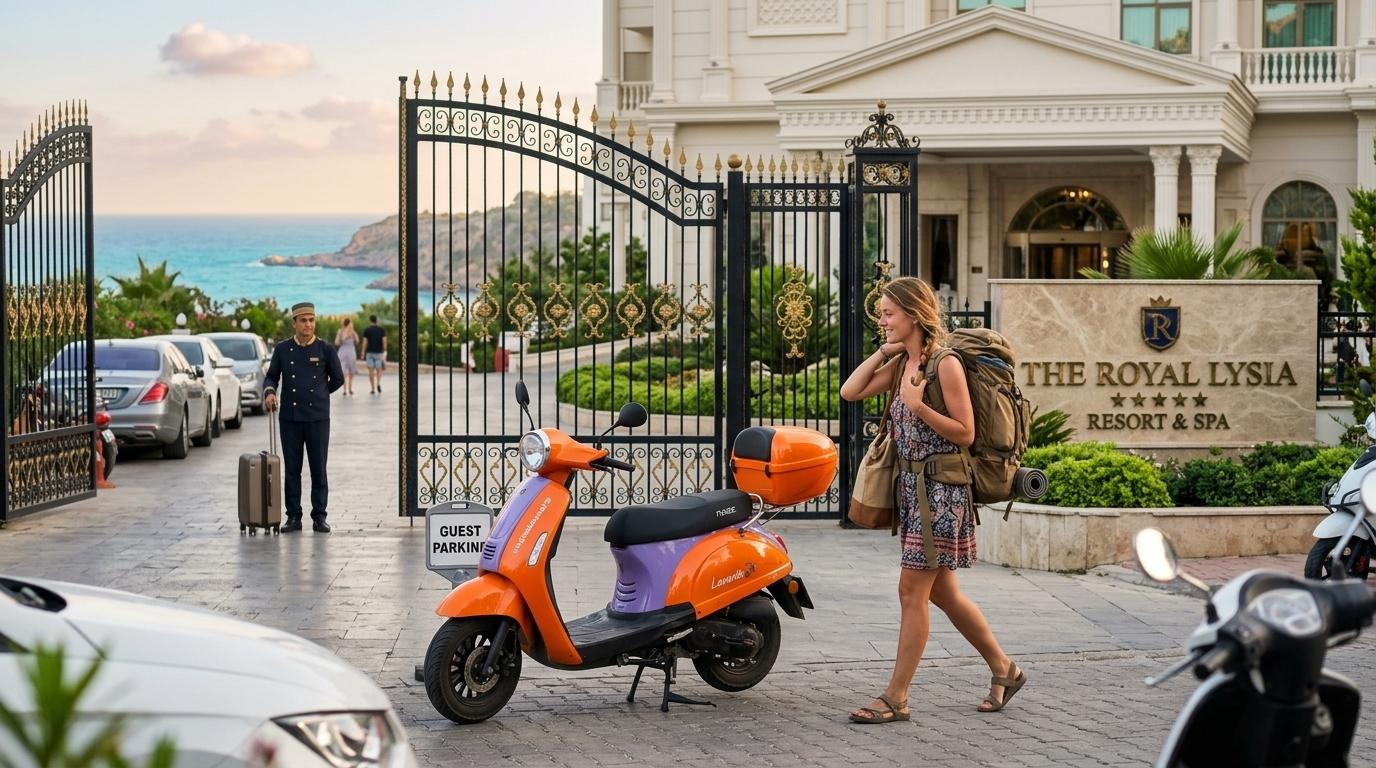
A wristband you don’t take off even in the shower. An animator cheerfully shouting into a microphone at ten in the morning. The sea is two hundred meters away, but between you and it stand three hundred sun loungers, claimed with towels at seven a.m.
You’re in Turkey. And you haven’t seen it.
Every year, millions of tourists pass through Antalya Airport alone — this year the count had already reached 6.5 million foreign visitors by late July, and the city was expecting its eight-millionth guest by August. Most of them will fly home without ever learning what the country they flew to actually smells like. Not because they’re lazy. Because all inclusive is engineered as a system in which there is simply no reason to step outside.
We recently debated this with Sergey Polonsky — the same man who once owned one of Turkey’s largest hotels, the Sungate Port Royal in Kemer: he bought it for 340 million euros and sold it for 190. A man who built all inclusive himself knows this machine from the inside better than anyone.
Polonsky, in conversation, puts it bluntly, as he always does: tourism in Turkey is the hotel. The tourist doesn’t need the country — he needs a product: food, entertainment, a safe environment. Everything beyond the hotel gates doesn’t exist for the mass-market guest — and, frankly, isn’t supposed to exist. The hotel is the Turkey he purchased.
You can’t argue with the business logic: a man who sold the “hotel” product thinks in hotels. But the conclusion — “Turkey equals the hotel” — is one we argue against until we’re hoarse. Because we hear that dogma ten times a day from guests who take a scooter “just for an hour, just to ride to the old town” — and return eight hours later wide-eyed. The dogma shatters the exact moment a person rides beyond the property line for the first time.
Here’s what happens next, once the dogma is broken.
Morning, eight o’clock, the heat hasn’t risen yet. Instead of the omelet line — the Düden Waterfalls: the Lower Düden crashes straight into the sea off the cliffs near Lara, and at this hour there’s almost nobody there except fishermen and a couple of runners. The ride from the tourist zone takes about twenty minutes — if you’re not stuck in traffic behind a bus full of hotel excursionists.
By noon — Kaleiçi, the old town. This is the Antalya that wasn’t built in 2005: streets two shoulders wide, Hadrian’s Gate standing there for more than eighteen hundred years, the Hıdırlık Tower, which was already old when no hotel anywhere in the world existed at all. You can simply get lost here — and it will be the best thing that happens to you this entire vacation. Lunch at a meyhane where the menu exists only in Turkish costs half of what a glass of wine costs at the hotel lobby bar. The flavor is beyond comparison.
Evening — sunset at Konyaaltı. Not “the hotel beach with imported sand,” but a long city promenade where Antalyans themselves come to walk: families, grandmothers on benches, teenagers on scooters. A Turkey that lives its own life instead of servicing someone else’s. Eight hours — and the country that was “not worth seeing” suddenly turns out to be the very place worth flying four hours south for.
On day two, a motivated traveler goes further. Termessos — an ancient city in the mountains, a kilometer above sea level, that Alexander the Great himself failed to conquer. Aspendos — a Roman theater where performances are still staged today, because its acoustics outperform modern halls. Canyons, mountain switchbacks, villages where they sell you gözleme and tea not because you’re a tourist, but because you’re a guest.
None of these places appears in the “free excursion from the hotel rep,” because forty-seat buses don’t go there. You go there on your own.
And this brings us back to the argument. Polonsky is right about one thing: the mass tourist won’t ride to Termessos. But “the mass tourist won’t go” does not imply “the tourist doesn’t need it.” All it implies is that the all-inclusive system never gives him the chance to find out that he needs it. The hotel doesn’t show you Turkey — it shows you the hotel and calls it Turkey. That is what all inclusive actually kills: not the economy, not the villages — the very possibility of meeting the country.
We built Lavanta Ride precisely for this moment — when a person decides to step beyond the gates. Registered, insured scooters, per-minute pricing from 12 lira, 24/7 support from our office in Muratpaşa: open the app, hop on, ride. No scheduled buses, no taxi drivers with a “special price for you,” no “sightseeing” tours that are really shopping runs.
Turkey itself is now officially shifting to year-round tourism — the Ministry of Culture and Tourism has announced a strategy designed to carry the country beyond the beach season. Which means that even for Turkey itself, the hotel model is no longer the only one. The country wants to be seen.
Polonsky and I will probably never agree — he’ll remain a hotel man, and we’ll remain road people. But if you’re reading this with an all-inclusive wristband on your arm, here’s an honest deal: one day beyond the hotel gates. A waterfall in the morning, the old town at midday, sunset on Konyaaltı in the evening.
If after that you tell me Turkey is a hotel, I’ll admit defeat.
Nobody has so far.
